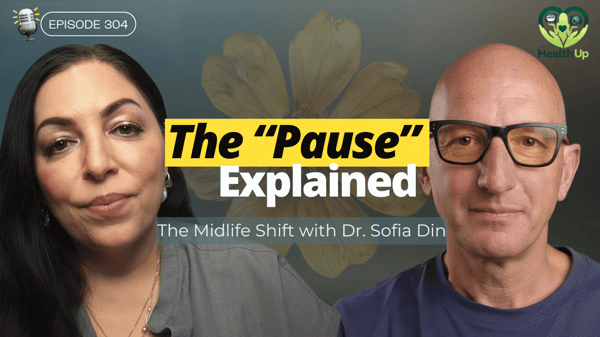

You wake up and reach for your phone or watch before you have even opened your eyes properly. How did you sleep? The score says "not great". Then comes the workout: 30 minutes, heart rate in the right zone, tick the box. If this sounds familiar, you are not alone, and it is exactly what Anthony Hartcher talks about in a recent solo episode of the me&my Health Up podcast.
His message is simple: when we track everything, life quietly becomes a game of chasing numbers, and we lose touch with the one source of information we carry everywhere, our own body.
When a score disagrees with how you feel
Anthony is open about the fact that he was a tracker himself. He wore a wearable ring for five years and says it helped him understand his sleep patterns and what helped or hindered them. But over time he noticed a pattern. Some mornings the ring told him he had slept badly, yet he felt fine, not tired or drained. Other days it gave him a great score and he did not feel great at all.
So he stopped using it. His reasoning was that a score made by an algorithm is not a direct reflection of who you are or how you feel. Trends and historical data have their place, but they can end up in conflict with your lived experience, and when that happens it is easy to start trusting the device over yourself.
Trackers make life transactional
The word Anthony keeps returning to is "transactional". Every session becomes a number to hit, every night a grade to earn. What we want instead, he says, is a more relational way of living, starting with a relationship with ourselves.
He gives a practical example. Some days you may think you should do a high-intensity session, but you simply do not have the energy. His view is that if your body is saying no, listening to it matters more than ticking the box. You can complete the session and still feel worse for it.
Check in instead of checking the dashboard
Rather than asking your watch how you feel, Anthony suggests asking yourself. Stay still for a moment, tune into your senses and ask: how do I feel, and does this resonate with me right now? He calls this a direct connection between mind, body and environment, as opposed to being driven by data.
The same goes for the wider habit of copying others. He cautions against following whatever an influencer is doing or the latest study, noting that a small research group may not look anything like you. A study might involve a male population when you are female, or a different ethnic group from your own. Health, in his view, is best built around how you feel, what resonates, and what you actually want to do in this moment. If you want a related look at how a popular number took on a life of its own, read 10,000 Steps a Day: Where the Number Came From and What Science Says.
The cold plunge and the sauna timer
One of the most vivid examples in the episode is the cold plunge. If you are staring at a number on your watch, willing the time to pass, Anthony says you are stressing yourself and may be doing more harm than good. If you instead surrender to the cold, accept it for what it is and notice what your body is experiencing, you can often stay in longer and get more from the experience. The same applies to ten minutes in the sauna or any other target. Be present with the experience rather than the clock.
Chasing highs and the middle road
Anthony also touches on dopamine. He mentions reading that some young people take more risks for two reasons: constant stimulation makes ordinary experiences feel like white noise, so they need a bigger hit, and they are so distracted that risky behaviour is a way to feel present. His point is that we do not need to chase highs or take risks to be present. We can get there anywhere, any time, simply by stopping and connecting our senses to where we are and what we are doing.
This ties into the idea of the middle road. Extremes tend to make us less adaptable, and he sees resilience as coming from adaptability. When we are present, centred and following the middle road, he says, that is when we adapt best. If your mind often feels overloaded, you may also find Cognitive Overload: Why Your Brain Is Always "Full" a useful companion read.
Self-leadership and the relationship with yourself
Anthony's core theme is self-leadership. You know yourself better than anyone else, so be self-led, avoid comparing yourself to others, and look for proactive things that suit who you are. He also links this to connection with other people: if we are disconnected from ourselves, we are likely to feel more disconnected from others, so building that self-relationship comes first.
Simple ways to put this into practice
- Ask first, check second. Before you look at any score, ask yourself how you feel.
- Let your energy decide. If the planned session does not suit your body today, it is okay to change it.
- Drop the timer now and then. Try a walk, a sauna or a cold shower without watching the clock.
- Be wary of copying. Check whether what someone else does actually resonates with you.
- Practise being present. Pause, tune into your senses and notice where you are.
This article is general information only and is not medical advice. Wearable data can be useful for some people, and if you have a health condition, talk to your doctor or a qualified health provider about what is right for you.
If you are struggling to find your own middle road, you are welcome to book a free 15-minute clarity call with me&my wellness, where Anthony can help you ask the right questions and shape habits that suit you.
Listen to more episodes of Me and My Health Up on the me&my wellness podcasts page.