
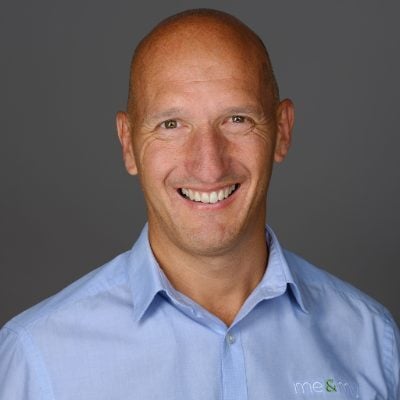
Mark Butler speaks and writes about burnout for a living, and about a year before he joined the Joyful Mate podcast, he burned out anyway. He calls it the irony of expertise. What he did next is the part worth borrowing: instead of cutting things out of an overloaded life, he added something in.
Listen to the full episode:
Who is Mark Butler?
Mark spent around 25 years in commercial and corporate workplaces while quietly studying mental health on the side. He ended up with two master's degrees in the field and published research, then moved into treatment work with veterans living with post-traumatic stress, people in addiction recovery, and people dealing with anxiety and trauma. After a while he wanted to be "the fence at the top of the cliff" rather than the ambulance at the bottom, so he moved into prevention. Today he works internationally with organisations, upskilling leaders in caring conversations, and he is part of the workplace section of the World Federation for Mental Health.
His interest is personal. He experienced anxiety as a child, at a time when, as he puts it, young boys weren't supposed to get anxiety, and he burned out himself about 20 years ago.
Happiness is a fleeting emotion. Contentment is the goal.
Mark's starting point is that happiness, like every emotion, is a message rather than a permanent state. He explained that emotions generally last only a few seconds, and that behind each one sits a need or want. Feeling thirsty is the emotion, hydration is the need, and getting a drink is the action. Emotions are never right or wrong, he said. They are a heads up.
So when most of us say we want to be happy, he suspects we are really after contentment: a steady sense of wellbeing built on positive emotions and lined up with our values. That is a more realistic target than feeling upbeat every moment of the day, and it removes the pressure of thinking we should always be happy.
Safety, trust and belonging come first
Mark pointed out that Maslow himself reportedly never intended his hierarchy of needs to be read as a strict pyramid, and that connection and belonging matter as much as food and shelter. He also talked about "mattering", the feeling that we are noticed, needed and relied on by other people.
He made a point that is easy to miss: we don't think our way to trust. By his account, our senses take in far more information than our thinking brain can process, and we decide whether we feel safe very quickly. The thinking part then justifies the feeling. His practical takeaway was simple. Trust your instinct. If something feels like fun, do it. If it doesn't, stop.
Play is the first thing we give up
This is the heart of the conversation. When we are busy, stressed or burning out, the first thing to go is play. Mark describes play as spontaneous fun with no consequences, the "dance like nobody's watching" kind. Anthony described it as being silly and not worrying about judgment.
Mark mentioned research he had read recently suggesting that a habit might take hundreds of repetitions to settle in, but far fewer when it is learned through play. He couldn't name the source on air, so treat the exact numbers as a conversation point rather than settled science. The idea still rings true: we remember what we enjoy.
He also shared a lighthearted test. If someone says their form of play is video games, he is cautious about it. Play that involves other people, or that gets you moving and laughing, tends to do more for us. Even hitting a tennis ball with your non-dominant hand and having a giggle counts.
The archery experiment
About 12 months before the recording, Mark realised he was overstretched. He loved his work and the people he worked with, which made it hard to spot the overload, and he noticed he was starting to isolate. His decision was to treat joy and play as a priority as high as financial success, with no excuses.
Rather than removing something to lighten the load, he added something. While looking out of the window during a Saturday spin class, he had been curious about the archery range outside. When a friend mentioned taking their kids to archery, he tagged along, picked up a bow and was hooked.
He now describes archery as meditative and social. He gets exercise walking to and from a target 30 metres away, he enjoys getting better at something new, and he mixes with people he would never have met otherwise. Together with some extra exercise, he estimates he added about 13 hours to his week at a time when he felt overwhelmed. His work didn't suffer. He said it got done anyway, and his wheels had been spinning because he wasn't giving himself any time for joy.
His advice: find something you love and do more of it, and be willing to stretch outside your comfort zone to find it. Joy doesn't always arrive on its own. Sometimes you have to go looking, and curiosity helps.
Why are so many of us struggling?
Asked why mental health statistics look the way they do, Mark said there is no single answer, but he suspects we are confronted with too much of everything, especially information. If that sounds familiar, our article on cognitive overload and what helps looks at it from another angle.
He also had pointed things to say about the workplace. Quoting a LinkedIn post by Zach Mercurio, he noted that Gallup's latest employee engagement research had reportedly hit a 10-year low despite years of perks, surveys and programs. His view is that engagement is a lagging measure, like counting limps to find out how many legs are broken. He would rather leaders pay attention to connection, belonging and mattering in everyday interactions.
He also cited research from Jen Maher that about 80% of us believe we can spot when someone is struggling, yet about 80% of people who are struggling feel nobody sees them, and around 75% of them wish they could have a deeper conversation. That gap, he said, is worth sitting with.
Slow down your nervous system
Mark described our fight-or-flight system as ancient and cautious. It is meant to switch on briefly, then hand back to rest and digest. Modern overload keeps many of us in the heightened state for too long. Animals shake off the stress response after a scare, he said, but humans keep replaying the "what ifs".
His first tool when someone feels anxious is the humble one: slow your breathing. He says that is how your brain learns you are no longer in danger, and it brings you back to the present. He is also clear that outside support is sometimes needed, and he is an advocate of medication when it is required. Joy and play, he added, are things you can add to your day rather than another job to take away from it.
Three takeaways to try this week
First, treat joy as a priority, not a reward for finishing everything else. Second, choose one thing you are curious about and try it, preferably with other people. Third, when you feel overwhelmed, slow your breath for a couple of minutes before you do anything else.
If you're curious about Mark's work, he mentioned his website, markbutler.au, and a book called Up Yours: The Pursuit of Radical Self-Care, which he said is available as a free digital download.
For a story from the same podcast about joy and belonging, read Larry Kesslin on finding "enough".
This article is general information from a podcast conversation and is not a substitute for personalised advice from a qualified health professional. If you are struggling, please speak with your doctor or a mental health professional.
The Joyful Mate podcast explores happiness, connection and wellbeing with guests from around the world. You can find more episodes on the me&my wellness podcasts page.