

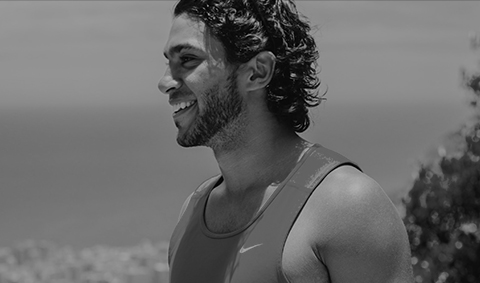
Why We Don’t Fully Understand Food — Cameron Borg on Rethinking Nutrition and Living Naturally
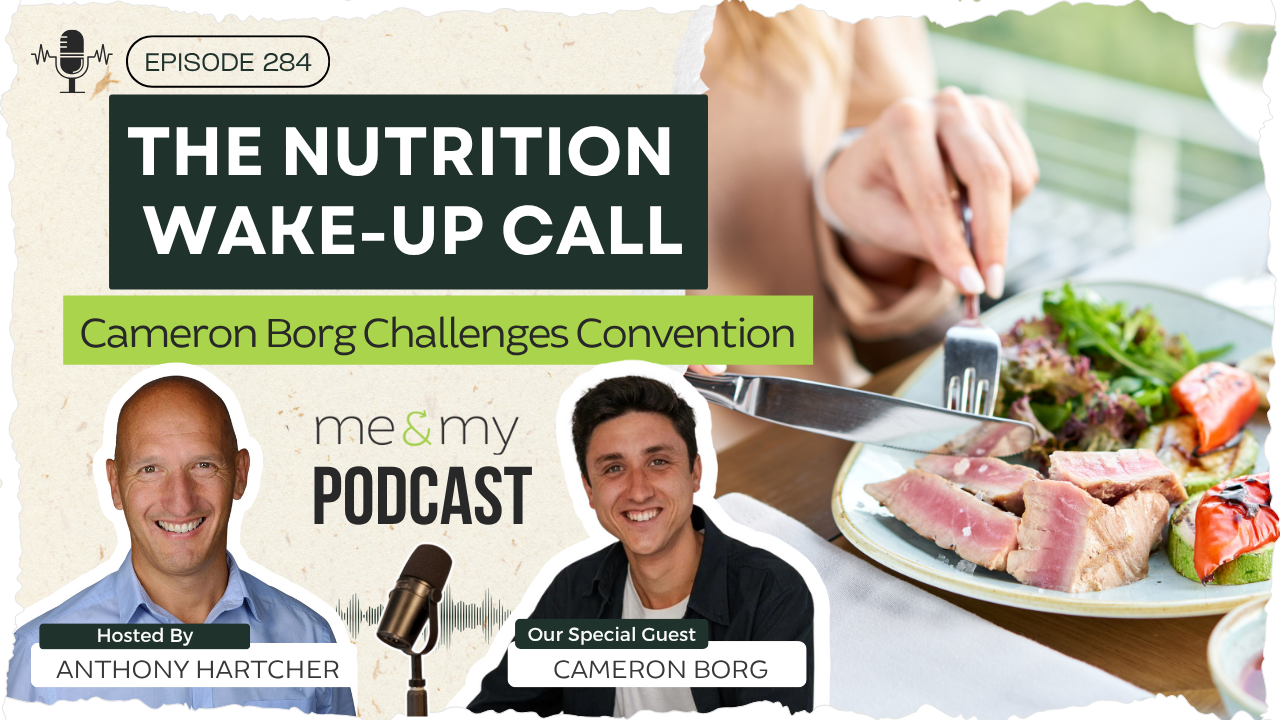
What if we told you that we don’t actually understand food as well as we think we do? 🤯
That’s the bold — yet humbling — perspective shared by Cameron Borg, a pulmonary scientist, nutritionist, and host of the Ricci Flow Podcast. In his conversation with Anthony Hartcher on the Me&My Health Up Podcast, Cameron unpacks why modern nutrition science still misses the bigger picture and how we can use simple logic, environmental cues, and ancestral wisdom to eat and live better.
Watch the full video here:
The Truth: We Don’t Really Know What’s in Our Food
Cameron begins with a thought-provoking statement:
“Fundamentally, we don’t understand food very well. There are so many nutrients in food that we have absolutely no idea what they do — or how they interact with all the others, let alone with each individual.”
Instead of trying to master every biochemical pathway, Cameron suggests that we accept this uncertainty and focus on logic — building meals that mirror what nature provides.
Our ancestors didn’t have nutrition degrees. Yet, they thrived by eating what was available seasonally and locally, guided by instinct, environment, and tradition — not labels and macros.
Food Must Be Contextual
Cameron’s “aha moment” came when he noticed how traditional diets vary with geography and sunlight exposure.
In India, for example, southern regions near the equator are largely vegetarian, while northern regions rely more on animal fats like ghee. Similarly, in Italy, olive oil dominates the south, while butter and lard become staples in the north.
“It was this realisation that what happens from a dietary perspective is completely contingent on environmental factors.”
The takeaway? There is no one-size-fits-all diet.
What’s “ideal” depends on where you live, what’s locally available, and how your body adapts to your environment.
Living an Outdoor Life: The Missing Nutrient
Food isn’t the only part of the nutrition equation — light plays a huge role.
Cameron explains that spending time outdoors isn’t just “good for you” — it’s normal. Our bodies evolved under full-spectrum sunlight, not fluorescent bulbs.
“Indoor lighting is alien to our biology. Even five minutes of sunlight every hour can make a massive difference.”
He encourages people — especially those working in offices — to find small ways to get outside, even briefly, and to prioritise morning and evening sunlight exposure to align the body’s circadian rhythm.
Building a Simple, Nourishing Meal
Forget calorie tracking. Cameron’s approach is refreshingly practical:
- Start with a base of quality protein (like grass-fed mince, eggs, or slow-cooked meats).
- Add locally available vegetables.
- Use soups and stews to preserve minerals and nutrients in the cooking liquid.
- Buy directly from farmers when possible.
And most importantly — don’t overcomplicate it. Enjoy food, even if your tomato sauce comes from Italy once in a while. Balance and enjoyment are part of good health.
Timing Matters: When You Eat Is as Important as What You Eat
Modern science supports the idea that meal timing affects metabolism and longevity.
Cameron notes that skipping breakfast is associated with higher risk of metabolic disease.
“A larger breakfast and a smaller, earlier dinner seem to yield the best results.”
Eating during daylight hours helps synchronise your body’s internal clock with the natural environment — making digestion, energy, and sleep more efficient.
Macros and the Protein Priority
When it comes to macronutrients, Cameron simplifies things:
“The only macro I’m really interested in is protein.”
Protein is the one macronutrient we can’t store, so regular intake is essential. His general rule of thumb?
👉 A fist-sized portion of protein at every meal.
By prioritising protein, your body naturally balances other nutrients, since wild, unprocessed protein sources come packaged with vitamins, minerals, and fats in the right proportions.
Mindset: The Missing Piece of Nutrition
Cameron’s trip to Italy brought this lesson home:
“I ate pizza, pasta, and cheese every day — and I’ve never felt better.”
His experience shows that mindset and enjoyment profoundly influence how our bodies process food. Guilt and fear around eating can do more harm than the food itself.
Rather than obsessing over dietary perfection, Cameron suggests focusing on connection, pleasure, and presence at the table.
“There’s an Italian saying that translates to, ‘You do not age around the dinner table.’ That’s the power of food shared with others.”
Key Takeaways from Cameron Borg
- Eat locally and seasonally.
Let nature — not trends — guide your diet. - Get outdoors daily.
Sunlight is a nutrient; treat it like one. - Prioritise protein.
A fist-sized serving per meal keeps your body thriving. - Eat earlier in the day.
Big breakfast, lighter dinner. - Enjoy your food.
Connection and mindset transform nutrition into nourishment.
Conclusion
Nutrition is both simpler — and more mysterious — than we’ve been led to believe.
As Cameron Borg reminds us, we may never fully understand every nutrient or metabolic pathway, and that’s okay.
What matters most is logic, connection, and respect for nature’s design. Eat real food, live by the sun, move your body, and share meals with people you love.
That’s the foundation of true nourishment.
Embrace a Holistic Approach with me&my wellness
At me&my wellness, we advocate for a holistic approach to health that harmonises mind, body, and spirit. Our holistic health coaching aims to address challenges, promoting healing on emotional and physical levels. We provide personalised strategies such as stress management, emotional healing, and guidance in balanced nutrition and lifestyle adjustments.
By focusing on a comprehensive approach, we empower you to reclaim your health and well being. Ready to transform your wellness journey? Book a 15-minute FREE consultation with us today and take the first step towards a healthier, more balanced life.