


Mastering Difficult Conversations: Lessons in Self-Discovery and Relationship Repair
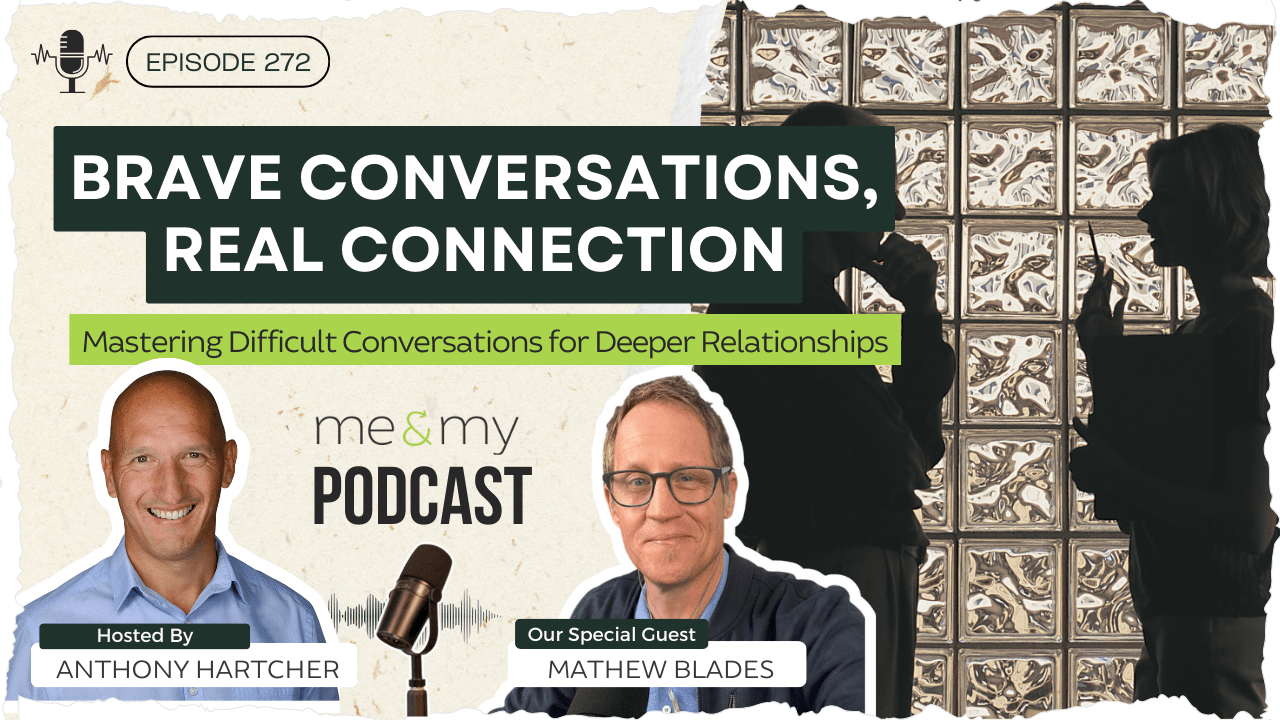
Difficult conversations are uncomfortable, often anxiety-inducing, and sometimes deeply personal, but they are also where the most growth occurs. In a powerful podcast episode featuring Mathew Blades, we explore how candid dialogue can lead to emotional clarity, stronger relationships, and even professional breakthroughs.
Watch the full video here:
Why Are Difficult Conversations So Crucial?
Mathew opens the conversation with a profound idea: hard conversations are the gateway to self-discovery. They’re not just verbal exchanges; they are emotional mirrors that reflect our unresolved wounds, outdated behaviours, and unmet needs. Whether it’s confronting a long-standing issue with a parent or making a vulnerable decision to leave a decades-long career, these conversations hold transformative power.
The 3 Universal Truths About Hard Conversations
Mathew and host Anthony Hartcher lay a foundation of understanding by identifying three universal truths:
- They come with anxiety – most people mentally rehearse these conversations for days.
- They involve people you’ll see again – meaning there’s a relational stake in the outcome.
- Some people are wired for them – they naturally seek truth over comfort, while others struggle.
Understanding these truths helps us approach difficult conversations with more compassion for ourselves and others.
Are You Operating on an Outdated ‘System’?
A compelling metaphor Mathew uses is the idea of updating your internal operating system. Many of us default to childhood programming when we’re under stress, reacting from a place of fear, avoidance, or aggression. But growth demands a system upgrade: responding from our wise, present-day adult self.
Ask yourself:
Are you having the conversation as a 10-year-old or a grounded adult?
When Honesty Yields Unexpected Rewards
One of the episode’s most powerful moments comes when Mathew shares how he left his 28-year career in broadcasting. After deciding to step away mid-contract, he initiated honest conversations with his family and employer. Rather than conflict, he was met with compassion—and even given a three-month paid vacation as part of his transition.
The lesson? Vulnerability, when communicated with clarity and integrity, opens doors, not closes them.
Healing Generational Wounds in 40 Minutes
In an emotional turn, Mathew describes a 40-minute conversation with his mother that helped repair decades of tension. He began with a simple but profound line:
“We need to have a hard conversation.”
That sentence set the tone and intention for openness. The result was a long-overdue emotional release and reconciliation. It’s a reminder that framing is everything—how we begin difficult talks can dramatically shape their outcome.
Conversation as Direction: Be the Director, Not Just an Actor
Mathew encourages a proactive mindset: see yourself as the director of the conversation. That means:
- Knowing your audience
- Asking open-ended questions
- Setting clear boundaries
- Being prepared to “cut” the conversation if it veers off course
This doesn’t mean being controlling—it means leading with clarity and care.
Creative Strategies to Lower the Stakes
Difficult conversations can feel threatening, especially within families. Matthew suggests pairing serious discussions with low-pressure activities like bowling or walking. These distractions provide mental “breaks” that lower emotional intensity and facilitate openness.
Handling Verbal Jabs: The Power of ‘Ouch’
When conversations turn sharp or passive-aggressive, Mathew recommends this disarming response from Dr. David Lykken:
“Ouch. Did you mean for that to hurt me?”
This invites reflection without escalating the situation, allowing both parties to return to the conversation with more awareness.
The Final Principle: Prioritise Your Needs
One of the closing questions raised is perhaps the most powerful:
“Why is what they want more important than what you need?”
It’s a reminder that difficult conversations aren’t about people-pleasing—they’re about respecting your truth, even when it feels uncomfortable.
Conclusion
Difficult conversations are not something to avoid—they’re something to master. As Mathew Blades demonstrates through deeply personal stories and actionable techniques, these moments can unlock healing, clarity, and even surprising opportunities. Whether you’re navigating a career pivot, mending family wounds, or learning to enforce healthy boundaries, embracing hard conversations is one of the most courageous acts of self-respect.
Want to start upgrading your own ‘operating system’? Begin with a single sentence:
“We need to have a difficult conversation.”
Embrace a Holistic Approach with me&my wellness
At me&my wellness, we advocate for a holistic approach to health that harmonises mind, body, and spirit. Our holistic health coaching aims to address challenges, promoting healing on emotional and physical levels. We provide personalised strategies such as stress management, emotional healing, and guidance in balanced nutrition and lifestyle adjustments.
By focusing on a comprehensive approach, we empower you to reclaim your health and well being. Ready to transform your wellness journey? Book a 15-minute FREE consultation with us today and take the first step towards a healthier, more balanced life.